Wayfair
Shipped
Moving Wayfair onto one
configurable component system
I led the full-funnel redesign and component replatform at Wayfair. The hardest part was getting every team on board: proving the new system worked on flagship pages, then migrating the rest of the funnel.
- My role
- Director, Head of Product Design. Led the team and full-funnel transformation.
- Rollout order
- Proved first by my senior Best-in-Class group, then adopted by core funnel teams.
- Outcome
- One configurable component library adopted across the whole shopping experience.
Three features built on the shared components
Original interaction prototypes
Brand destinations
Dedicated editorial storefronts for Wayfair’s in-house brands.
Interactive moodboards
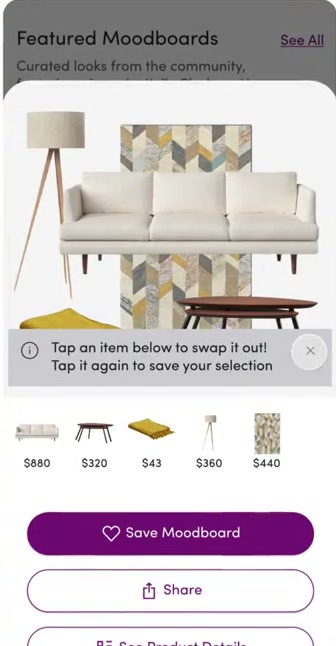
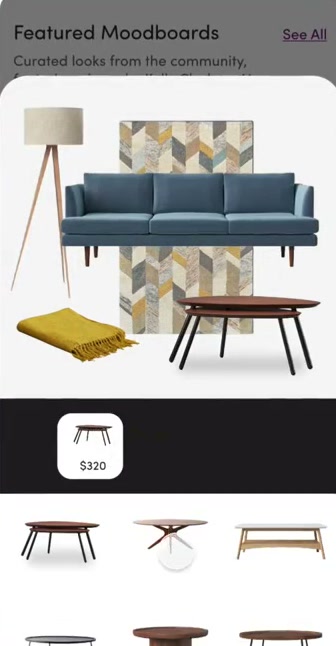
Swap furniture pieces directly inside a styled room scene.
Predictive visual search
See matching product previews before loading a full search page.
Rollout strategy
Shipping on flagship pages before asking others to switch
Where we started
Disconnected codebases slowed down basic UI changes
A legacy stack and inconsistent patterns across the funnel made even small design updates slow.
What we changed
Testing the new model on our hardest pages first
My senior Best-in-Class designers used the new components to ship brand destinations, interactive moodboards and visual search first.
How it runs now
Rolling the components out to every funnel team
Once those features shipped, my scope expanded across the full funnel so teams could configure pages from the same component set.
How it works
Swapping furniture inside
a styled room photo
Home shoppers usually buy for a whole room rather than one item in isolation. Tap-to-swap lets them test different sofas in place.
What this proved
The same underlying components handled editorial brand stores, interactive room scenes and search previews, so teams stopped rebuilding basics from scratch.
Two states from our original interactive moodboard prototype.
Full-funnel impact
Running the full shopping funnel on one component library
By the end of the replatform, browse, search, brand stores and product pages ran on the same components, with downstream teams adopting the patterns my group proved.
Day to day, product teams could configure page layouts for editorial stories, room builders or search results without writing one-off UI each time.
Wayfair in production later on
Live site recording · November 2026
Live Wayfair product page
A recording of the live site from November 2026 showing how the product page has evolved since the replatform.